

From Fires to Fishing: OFS Earth Day in Action

Earth Day at Operation Fresh Start isn’t symbolic. It’s hands-on, technical, and grounded in real work.
At CamRock County Park in Cambridge, all OFS Legacy and Conservation Academy crews spent the day, Thursday, April 30, rotating through field stations led by Dane County Parks, Wisconsin Department of Natural Resources (DNR), Dane County Land & Water Resources Department (LWRD), the U.S. Fish and Wildlife Service (USFWS), and other local partners.
Each station offered something different. Together, they showed what conservation work actually looks like.
From Bike Repairs to Prairie Restoration
At the bicycle maintenance station, staff from CORP Trails and Trek Bikes walked participants through essential repairs, such as changing a tire, and connected those skills to trail systems and outdoor access.
Nearby, participants transplanted prairie plugs (young plants grown from seed) into larger pots. Those plants will be donated to local schools, supporting new gardens across Dane County.

For Legacy participant Kaitlyn, this work stood out.
“I was actually doing things with my hands,” she said. “I really like doing work that helps the community.”
Fire, Soil, and Systems Thinking
At the natural areas station, participants stepped into one of the most intriguing parts of land management: controlled burns. Using drip torches, they learned how prescribed fire is started, managed, and safely extinguished using professional tools.

“I found it very cool with all the tools they use,” Kaitlyn said. “It was my first time using a water backpack. I thought it was also really fun to start the fires.”
At another station, staff from the Land, Water, and Resource Department dug soil samples up to three feet deep. Participants saw, layer by layer, how soil composition changes, and why that matters for carbon storage, water quality, and long-term ecosystem health.
Getting Off the Ground and Into the Water
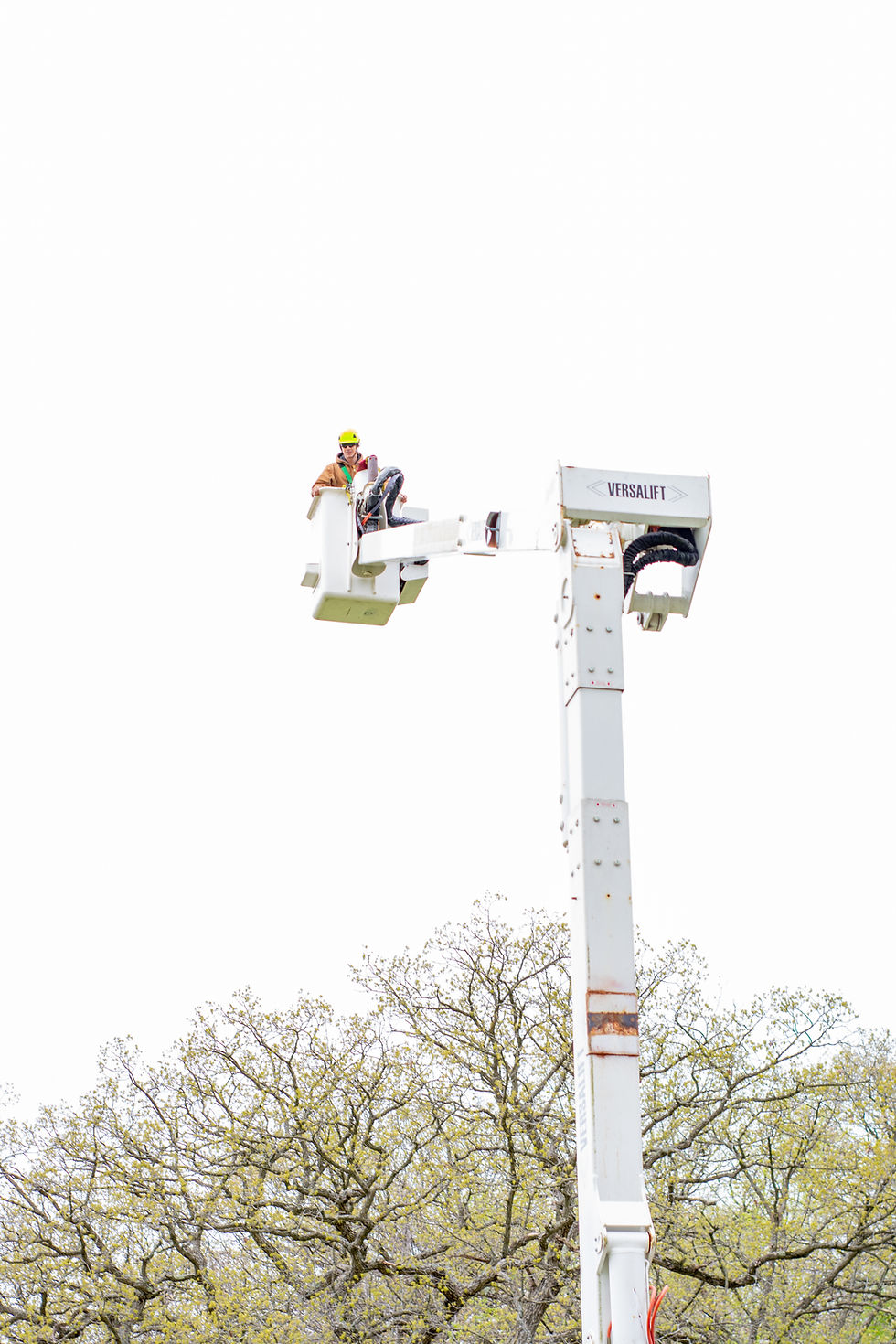
Forestry brought a different kind of perspective. Participants rode in a bucket truck reaching up to 60 feet in the air and tested out tree-climbing gear used in the field. It wasn’t a demo; it was an introduction to the physical skills and safety awareness required for the job.
In the Koshkonong Creek, things got even more hands-on. Teams from LWRD and the Wisconsin DNR demonstrated electrofishing—a method that briefly stuns fish so they can be studied and released. Participants examined the fish up close, and learned how scientists assessed the health of an entire water system.

Why Pollinators Matter
The final station focused on pollinators. Participants learned how to identify different species and why they matter, with a focus on the Rusty Patched Bumble Bee, a threatened species that’s increasingly difficult to find.
It was a reminder that conservation isn’t just about large landscapes. It’s also about the smallest, most overlooked pieces of the ecosystem.
More Than a Single Day
This annual event brings together partners and participants for one purpose: exposure and hands-on learning in the outdoors.
Exposure to real tools.
Exposure to real career paths.
Exposure to work that matters.
By the end of the day, participants hadn’t just learned about conservation; they had practiced it. They worked alongside professionals, asked questions, and saw themselves in roles that once felt out of reach.
“These opportunities allow me to use tools that many people might not think I can,” Kaitlyn said. “It helps build my confidence, and it teaches me I can do anything.”
Building Opportunity Through Partnership
Hands-on experiences like this don’t happen without strong partnerships.
Thank you to Dane County Parks, Wisconsin Department of Natural Resources, Dane County Land & Water Resources Department, the U.S. Fish and Wildlife Service, and all the presenters who shared their time, skills, and expertise. You didn’t just lead stations; you opened doors.
Investment in opportunities like this helps participants build skills, gain confidence, and step into careers that make a lasting impact on our communities and environment.


