

Rooted in Purpose: Mary McDonough-Sutter’s Stewart Lake Restoration Efforts
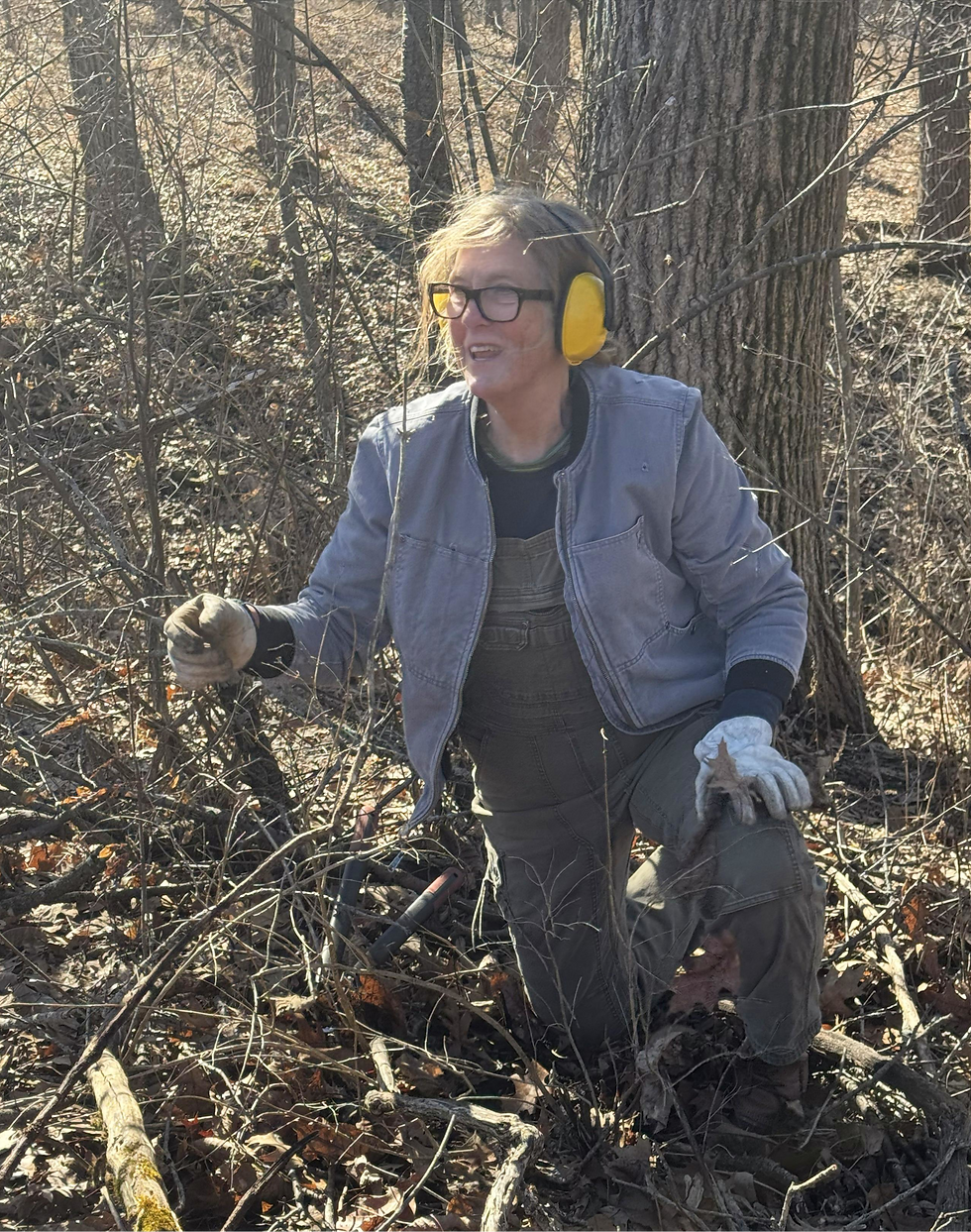
The hum of saws and the crack of brush breaking echo across Stewart Lake County Park. In the middle of it all stands Mary McDonough-Sutter — steady, focused, and working shoulder to shoulder with Operation Fresh Start crews.
“I’m here today doing what I often do,” she said on one February morning. “Cut and treat the brush and stack it to burn later.” Then she smiled. “The happiest part of what I’m doing today is working with an OFS (Operation Fresh Start) crew to get some of that done.”
Mary is one of the Dane County Parks volunteer land stewards at Stewart Lake County Park, a 191-acre landscape of rolling hills, wetlands, and a 10-acre lake just outside Mount Horeb. It was the first park in the Dane County Parks system, purchased through the vision of Frank Stewart, a former educator and public servant who believed rural communities deserved access to natural spaces.
That spirit of service resonates with Mary.
After retiring five years ago from teaching vocational and transition education for students with special needs at Mount Horeb High School, she didn’t slow down. She redirected her energy. Since then, she’s spent “many hours a week” restoring the park’s primary plant community: Oak Savanna.
Restoring What Once Was
Oak Savanna was once the most widespread plant community in Wisconsin, Mary said. Today, it’s one of the most endangered.
To restore it, Mary and other volunteers, along with Operation Fresh Start crews, remove invasive and non-savanna tree species so red oak, white oak, bur oak, and shagbark hickory can thrive. Clearing brush creates space for acorns to take root and native grasses to return. Those grasses, in turn, fuel prescribed burns that maintain the savanna and prevent it from reverting to dense woodland.
“It brings back a crucial kind of natural plant community,” Mary said. “There are important species of birds, mammals, and amphibians that really need the oak savanna.”
Restoring the land is often about ecology, but for Mary, it’s also about history and respect.
“It gives a nod to and respects the tradition of the Indigenous people of Wisconsin that maintained vital savanna communities,” she said. “They could travel through it, hunt through it, and keep their traditions alive.”
This work is physical. It’s slow. It takes years. That’s exactly why partnership matters.
Building Plant Communities and Human Communities
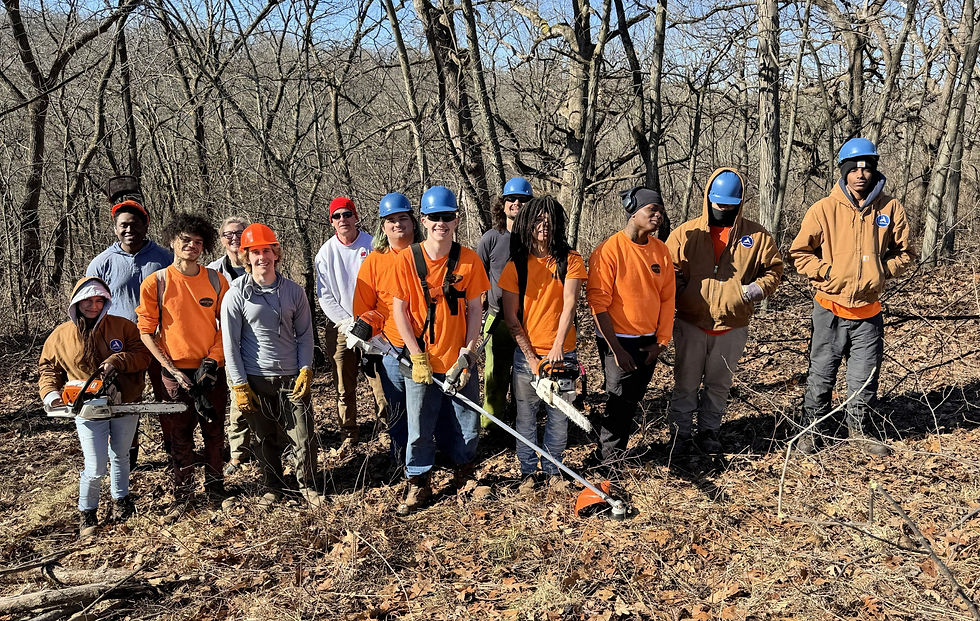
For Mary, working alongside Operation Fresh Start adds something essential.
“Operation Fresh Start adds a layer of purpose to this already purposeful work,” she said. “It’s building human community as well as plant communities.”
That perspective isn’t accidental. As a former educator, Mary spent her career helping young people navigate the transition from school to adulthood. She sees the same opportunity in the woods.
“Maybe for me, as a retired teacher, it’s a nice fit,” she said. “I’m more of a mother hen than a lone wolf, so I’d prefer to be out working with people, working alongside folks, learning alongside folks.”
OFS crews don’t just cut brush and stack wood. They see the results of their work over time.
“If I didn’t treat the stump of what I cut down, what does it look like next month?” Mary asked. “It gives a lot of natural consequences to our work. Natural rewards and natural consequences.”

The lesson is clear and immediate. Do the job thoroughly, and the landscape responds. Cut corners, and the problem returns.
A Full Experience
Mary believes restoring plant communities is important. But she’s clear about what matters most.
“Maintaining relationships with our greater community is even more important,” she said. “And they go hand in hand.”
She credits the partnership with OFS as one of the things that keep her committed.
“I don’t think that I would have been able to sustain my own interest and my sense of accomplishment without adding the participation of OFS and the good people at the county,” she says. “It just makes for a fuller experience.”
For OFS participants, that fullness works both ways.
They gain real-world conservation skills. They contribute to a 191-acre park that will serve families for generations, and they work alongside a volunteer who shows up consistently, not for recognition, but for community.
Danny Radi, one of the OFS Crew Supervisors who often works at Stewart Lake County Park with Mary, said he is impressed with Mary’s work ethic.
“It was very eye-opening for me when I started this job to see how many of our local green spaces are almost entirely run by volunteers,” Danny said. “People like Mary are just unlike anyone else. She’s out here working before we get here, and she stays after we leave.”

Mary models what stewardship looks like beyond a job description. She shows that service doesn’t end at retirement. It evolves.
Getting Involved
For those inspired to step into this work, Dane County Parks offers volunteer training for people of all experience levels.
“They have an incredible volunteer program,” Mary said. “You don’t have to be a professional to learn the essential skills.”
At Stewart Lake, those skills are shaping more than the landscape. They’re shaping relationships among generations, organizations, and people with the land beneath their feet.
As Mary and OFS crew members stack brush, the result isn’t just a clearer park.
It’s a stronger community, rooted in purpose.
